
Category Archives: politics

Human Trafficking Awareness

Yesterday was Human Trafficking Awareness Day. This day was set by a resolution of Congress in hopes Americans would understand that the fight for freedom is not over. This fight is part of our national heritage and identity. It compelled our ancestors to colonize this continent.

Unless Americans remember the right of liberty is rooted in the nature of humanity’s equality and dignity, no legitimate reason exists for continued efforts to liberate enslaved people.

What is the nature of human equality and dignity? The Declaration of Independence defines as created by nature’s God. Because the human best reflects the nature of God, the dignity of every human being is of inestimable worth. Acts of injustice and cruelty reflect the worst of human thought and behavior.

It will take more than one day each year for Americans to reeducate themselves about God, equality, liberty, and law out of which American freedom originated.

At the beginning of this month, President Obama declared January as human trafficking prevention month. During his proclamation, Pres. Obama stated:

As a Nation, we have known moments of great darkness and greater light; and dim years of chattel slavery illuminated and brought to an end by President Lincoln’s actions and a painful Civil War. Yet even today, the darkness and inhumanity of enslavement exists. Millions of people worldwide are held in compelled service, as well as thousands within the United States. During National Slavery and Human Trafficking Prevention Month, we acknowledge that forms of slavery still exist in the modern era, and we recommit ourselves to stopping the human traffickers who ply this horrific trade….

Fighting modern slavery and human trafficking is a shared responsibility. This month, I urge all Americans to educate themselves about all forms of modern slavery and the signs and consequences of human trafficking. Together, we can and must end this most serious, ongoing criminal civil rights violation.

Indeed, it is a crime against God and humanity.

There are a number of organizations and on-line educational sites. They include Polaris Project, A-21 Campaign, humantrafficking.org, Human Trafficking Blog to name a few.

To understand the problem truly, one must retrace the history of the struggle of liberty. A good place to start would be with the Bible. From Genesis to Revelation, it tells of the ancient struggle for freedom and how it has been achieved. This is one of the key texts that informed the Protestant reformers, Puritans, English reformers, colonists, preachers, theologians, moral philosophers, lawyers and their laws of nature and of nations, and even our national founding. Human nature and human rights cannot be fully understood without understanding the sacred text about human bondage and freedom.
A Mid-East Guide for the Perplexed

By Ambassador (ret.) Yoram Ettinger, “Second Thought

In the pursuit of peace, alliances and interests, western policy-makers tend to sacrifice perplexing Mid-East realities on the altar of oversimplification and wishful-thinking. However, their attempts to implement unsubstantiated policies tend to inflame rather than extinguish regional fires.

The distinquished Mid-East historian and former Director of Mid-East Studies at Johns Hopkins University, Lebanese-born Prof. Fouad Ajami, asserted that Mid-East realities constitute “a chronicle of illusions and despair and of politics repeatedly degenerating into bloodletting (The Arab Predicament, Cambridge University Press, 1990).”

Western policy-makers and public opinion molders would benefit from studying the writings of some of the key Mid-East historians and scientists, whose research reaffirms that Mid-East fundamentals have remained largely intact for the last 14 centuries.

For example, the late Iraqi-born Prof. Eli Kedourie, from the London School of Economics, who was the leading Mid-East historian, wrote in Islam in the Modern World (Mansell publishing, 1980): “The fact that political terrorism originating in the Muslim and Arab world is constantly in the headlines, must not obscure the more significant fact that this terrorism has a somewhat old history…which would not be easy to eradicate from the world of Islam.”

The late Egyptian-born Prof. P. J. Vatikiotis, from the London University School of Oriental and African Studies, another icon of Mid-East history, wrote in Arab and Regional Politics in the Middle East (Croom and Helm, 1984): “The use of terrorism by [Arab] states or rulers…has been for domestic, regional and international political purposes… Rulers of this provenance and background are hegemonists of power… If Islam and those who claim to represent it and wish to implement its law and rule over man, society and the polity reject all other human forms of law and rule…then clearly there is an unbridgeable gap between them and all other social and political arrangements… The dichotomy between the Islamic and all other systems of earthy government and order is clear, sharp and permanent; it is also hostile.”

The assumption that the stormy Arab winter of 2011 is a temporary mishap, which could be cured by a constitutional panacea, is detached from Mid-East reality. Moreover, most Arab rage has been directed toward Arabs, and was introduced long before the 2011 turmoil and butchery on the Arab Street startled. For instance, some 200,000 Lebanese were killed in internal violence during the 1970s and 1980s; tens of thousands Syrians were slaughtered by Hafiz Assad in 1982; some 200,000 Iraqis were murdered by Saddam and additional 300,000 Iraqis were killed during the 1980-1986 war against Iran; about 2 million Sudanese were killed, and 4 million were displaced, during the 1983-2011 civil war; public executions and decapitations are regularly held in Saudi Arabia; etc.

The deep roots of contemporary Mid-East Islamic violence are highlighted by Prof. Efraim Karsh, Head of Middle East and Mediterranean studies at London’s King’s College, editor of the Middle East Quarterly and author of Islamic Imperialism: A History (Yale University Press, 2006): “In the long history of the Islamic empire, the wide gap between delusions of grandeur and the forces of localism would be bridged time and again by force of arms, making violence a key element of Islamic political culture… Arab rulers systematically convinced their peoples to think that the independent existence of their respective states was a temporary aberration. The result was a legacy of oppressive violence that has haunted the Middle East [from the seventh century] into the 21st century… It is doubtful whether Middle East societies will be able…to transcend their imperial legacy and embrace the Western-type liberal democracy that has taken European nations centuries to achieve…”

A key lesson to US policy-makers was delivered by Prof. Vatikiotis (ibid): “Inter-Arab relations cannot be placed on a spectrum of linear development, moving from hell to paradise or vice versa. Rather, their course is partly cyclical, partly jerkily spiral, and always resting occasionally at some ‘grey’ area. Secondly, American choices must be made on the assumption that what the Arabs want or desire is not always – if ever – what Americans desire; in fact, the two desires may be diametrically opposed and radically different.”

Western interests and the pursuit of peace would be dramatically enhanced, should Western policy-making be based on the knowledge of the deans of Mid-East studies, thus learning from history by avoiding – rather than by constantly repeating – costly errors.

See also www.TheEttingerReport.com.

Muslim Persecution of Christians: December, 2011

by Raymond Ibrahim

The Nigerian church bombings, wherein the Islamic group Boko Haram killed over 40 people celebrating Christmas mass, is just the most obvious example of anti-Christian sentiment in December. Elsewhere around the Muslim world, Christmas time for Christians is a time of increased threats, harassment, and fear, which is not surprising, considering Muslim clerics maintain that “saying Merry Christmas is worse than fornication or killing someone.” A few examples:

Egypt: The Coptic Church is being threatened with a repeat of “Nag Hammadi,” the area where drive-by Muslims shot to death six Christians as they exited church after celebrating Christmas mass in 2010. Due to fears of a repeat, the diocese has “cancel[ed] all festivities for New Year’s Eve and Christmas Eve.”

Indonesia: In a "brutal act" that has "strongly affected the Catholic community," days before Christmas, "vandals decapitated the statue of the Virgin Mary in a small grotto … a cross was stolen and the aspersorium was badly damaged.

Iran: There were reports of a sharp increase of activities against Christians prior to Christmas by the State Security centers of the Islamic Republic. Local churches were "ordered to cancel Christmas and New Year's celebrations as a show of their compliance and support" for "the two month-long mourning activities of the Shia' Moslems.

Malaysia: Parish priests and church youth leaders had to get "caroling" permits—requiring them to submit their full names and identity card numbers at police stations—simply to "visit their fellow church members and belt out 'Joy to the World,' [or] 'Silent Night, Holy Night.'

Pakistan: "Intelligence reports warned of threats of terrorist attacks on Christmas Eve and Christmas Day," adding that most church security is "inadequate." Christians also lamented that "extreme power outages have become routine during Christmas and Easter seasons.

Meanwhile, if Christians under Islam are forced to live like dhimmis—non-Muslims under Muslim authority, treated as second-class citizens—in the West, voluntarily playing the dhimmi to appease Muslims during Christmas time is commonplace: the University of London held Christmas service featuring readings from the Quran (which condemns the incarnation, that is, Christmas); and “a posh Montreal suburb has decided to remove a nativity scene and menorah from town hall rather than acquiesce to demands from a Muslim group to erect Islamic religious symbols.”

Categorized by theme, the rest of December’s batch of Muslim persecution of Christians around the world includes (but is not limited to) the following accounts, listed according to theme and in country alphabetical order, not necessarily severity. Continue reading

Elect Rick Santorum? (Video)

[youtube http://www.youtube.com/watch?v=5Aohgrn1peA&w=560&h=315]

Elect Mitt Romney for President? An NIA Video

[youtube http://www.youtube.com/watch?v=4vS9SF3vc-A?rel=0&w=490&h=279]

Unconstitutional Appointments Violate Oath of Office

By Gary Palmer

The primary focus of the 2012 election has been the economy, but there is another major issue that should be on voters’ minds in November … the blatant disrespect and disregard of the Constitution.

With President Barack Obama’s appointment of Richard Cordray as director of the Consumer Financial Protection Bureau, the President brushed aside the Constitution’s requirement for all presidential appointees to be approved by the United States Senate. In addition to appointing Cordray, Obama also bypassed the Senate by appointing three new members to the National Labor Relations Board.

The Obama Administration attempts to justify these appointments by claiming that the Constitution provides for a president to make appointments while Congress is in recess. It should be noted that Congress is not in recess because the Republicans specifically wanted to block these and other Obama appointments. It should also be noted that the Democrats used the same tactics to block President George W. Bush’s appointees.

According to Article 1, Section 5 of the Constitution, Congress cannot be in recess for more than three days without the consent of both chambers. Neither chamber passed an adjournment resolution, therefore, Congress is not in recess and in fact, continues to hold pro-forma session.

Despite this fact, the Obama Administration has argued that Congress is not doing any work and is therefore not in session. Because the Constitution requires that both the House and the Senate pass adjournment resolutions, it doesn’t matter whether or not Congress is actually doing business or even if a majority of members are present. According to the Constitution, they are still in session.

During the Bush Administration, Democrat Senate Majority Leader Harry Reid kept the Senate in pro-forma session to prevent Bush from making any recess appointments. As a member of the Senate, Obama supported this tactic. And even though President Bush was urged to ignore the pro-forma sessions and make recess appointments anyway, he refused to do so.

In an effort to justify Obama’s appointments, some argue that Bush did the same thing when he appointed former Alabama Attorney General Bill Pryor to the 11th Circuit Court during an “intrasession” recess. That argument was whether or not the President could make appointments during an “intrasession” recess instead of an “intersession” recess and doesn’t apply here because Congress is not in recess.

On January 5th, The Wall Street Journal editors wrote, “These appointments are brazen enough that they have the smell of a deliberate, and politically motivated, provocation.” The Obama campaign has made it clear that running against Congress will be central to their re-election strategy. However, by running rough shod over the Senate’s advise and consent authority for presidential appointees, the Obama Administration has made the Constitution a major election issue.

Restoring constitutional government is a mainstay of the Tea Party Movement agenda. It was a major element in the 2010 elections that resulted in the Democrats losing control of the House of Representatives and almost losing the majority in the Senate. Voters in that election were outraged by the perceived abuses of the Constitution in everything from environmental policy to the passage of Obamacare.

Considering that a November 2011 Rasmussen survey reported that 69 percent of Americans believe that the federal government no longer has the consent of the governed, brushing aside the Constitution and making these appointments only reinforces that perception. It is the political equivalent of throwing more fuel on a political fire that burns hot, not only with Tea Party members, but also with millions of others who are concerned that the Constitution is being violated.

In the meantime, it remains to be seen whether or not the Republicans in Congress will stand and fight for the Constitution. After all, they did take an oath to uphold and defend it.

Gary Palmer is president of the Alabama Policy Institute, a non-partisan, non-profit research and education organization dedicated to the preservation of free markets, limited government and strong families, which are indispensable to a prosperous society.

The Next Era of the Postal Service

By Sherrod Brown

This holiday season, Ohioans received scores of gifts—from Great Lakes beer to Cincinnati chili—but many of the parcels probably weren’t dropped off by their local postal carrier.

The United States Postal Service (USPS)—the second-largest employer in the United States and one authorized by the U.S. Constitution—is governed by rules that limit its financial viability. To address a growing deficit, more than 120 post offices and 10 mail processing centers in Ohio have been slated for possible closure because of financial challenges.

These closures could prove costly for middle-class families in our state, resulting in job losses and deteriorated service. That is why I fought for a moratorium on all postal facility closures until May 2012. With this additional time, Congress can modernize the rules and usher in the next era of the USPS.

Private delivery companies perform an important service. But the Post Office should be able to compete for all the parcel business, too. That’s why I’m fighting to pass the Postal Service Protection Act, legislation that would help bring the USPS back to fiscal solvency.

First, it would deal with the USPS’s fiscal challenges. This bill would address a broken pension system which currently costs the USPS more than $5 billion every year. Right now, the Postal Service must pre-fund 75 years of future retiree health care benefits in just 10 years. With this legislation, we can address immediate fiscal problems facing the USPS by overhauling the USPS retiree benefit requirements.

Second, it would allow the Post Office to innovate. By easing current financial constraints on the agency, the USPS would have additional avenues to earn income—like shipping beer or issuing a state fishing license—that can put the Postal Service back on the road to fiscal health.

The legislation would also protect a six-day delivery—preserving Saturday delivery and maintaining current standards for first-class mail delivery. This is vitally important for seniors and patients who depend on timely delivery of life-saving prescription medications.

With any postal reform legislation Congress considers, we must take into account what affect these decisions will have on America’s recovering economy. What would inaction mean for Ohio families?

Postal workers—many of them veterans, women, and rural residents—do more than deliver holiday cards and news from home. They also watch out for elderly neighbors, and help build a sense of community. Since 1775, the USPS has kept Americans connected with one another and the rest of the world.

Our state ranks eighth in the nation for the number of USPS employees—including letter carriers and sorters—who help Ohioans cash checks, obtain passports, and operate small businesses. We must help the USPS, a self-supporting government entity, adapt to the challenges of the 21st century.

A robust Post Office means that small businesses and non-profits have reliable and affordable means to conduct their business. It means that the shopping centers and small businesses in urban areas—which, in many cases, are anchored by the presence of a post office—can continue to thrive. It also ensures that seniors can receive their mail-order prescriptions and Social Security checks without delay.

The motto of the Post Office: “neither snow, nor rain, nor heat, nor gloom of night” dates back to antiquity. The Greek letter carriers likely faced unleashed dogs—though not email. Yet I’m confident that we can and must overcome the challenges faced by the USPS. This is our promise to our neighborhood postal worker, our neighbors, and our communities.

Debt Burden Threatens American Families

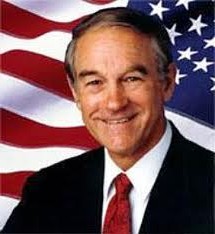
By Congressman Ron Paul

Last week, as most Americans were celebrating the holidays with family and friends, the Obama Administration announced plans to seek yet another debt ceiling increase in the New Year. While some fiscal conservatives will try to block this increase, their efforts are designed to fail thanks to the procedure set up by the last debt ceiling negotiations. Congress would have to pass a joint resolution opposing the increase, which the president could simply veto. Thus, an additional $1.2 trillion on top of our already unsustainable debt is a foregone conclusion. Our Gross Domestic Product continues to contract and now stands at $14.5 trillion. The debt already far exceeds that and will soon hit the new ceiling of $16.39 trillion.

Everyone in DC acknowledges that the debt is unsustainable, yet few are willing to take serious steps toward addressing it. Politicians in Washington cannot face the fact that the blank checks must stop. Many think we can ignore the mounting debts and deficits and eventually the economy will magically turn around and grow its way out of the mess. If you really understand why the economy is foundering, you understand the burden cannot all be put on the backs of the American people while politicians stick their heads in the sand.

According to a USA Today analysis, there are currently over $61.6 trillion in unfunded future government liabilities, which amounts to $528,000 per American household. A huge part of these liabilities are Medicare, Medicaid and Social Security – promises made to make the American people feel secure in their futures. But how secure should the American people feel knowing that a default is becoming more mathematically unavoidable with every NEW program added, every bailout, every debt ceiling increase, every new war we rush into, and every round of quantitative easing from the Federal Reserve? The last thing politicians should be doing is adding to that $528,000 household burden, with either more spending or more taxes. This is unequivocally a problem of too much spending by a government far outside its Constitutional bounds.

It is especially a slap in the face to the American family when the Federal Reserve dilutes the dollars we work for in order to bail out profligate banks and governments in Europe. The already perilous state of our economy and our currency should not be further endangered in a futile attempt to save the Euro. The least the government can do is allow Americans a choice in how to actually secure their financial futures that doesn’t depend on a sinking dollar and irresponsible government. My competing currency bill allows for that and I will continue to fight for economic freedom from foolish and selfish whims of the central bank.

It is nothing new for Washington to kick economic pain down the road. Optimistic politicians hope things will stay cobbled together just long enough to get through another election cycle, or that another administration will have to deal with the mess. The longer this cowardly attitude prevails, the bigger the problems become. Congress and the administration should exercise some good judgment, some political courage, and make the needed budgetary changes now. It would not be that difficult to do if Washington would simply work its way back to the Constitution instead of straying even further from it.

Rutherford Institute Urges U.S. Supreme Court to Hold Corporations Accountable for Human Rights Abuses in Keeping with the Rule of Law

(WASHINGTON, DC) — The Rutherford Institute has filed an amicus curiae brief with the U.S. Supreme Court in a case that will determine whether U.S. courts are open to persons who are victims of human rights abuses by international corporations. The Institute’s brief in Kiobel v. Royal Dutch Petroleum Co. asks the Court to reverse a federal appeals court ruling that corporations are not subject to liability under the Alien Tort Statute (ATS), a 200-year-old law that allows victims of violations of the law of nations to recover damages from the persons responsible for the violations.

In their brief, Institute attorneys argue that U.S. courts should do all they can to prevent and remedy human rights abuses and that it is contrary to established principles and the rule of law to allow corporations to escape responsibility for heinous crimes that violate established international standards simply because they are not “natural” persons. The Rutherford Institute’s brief in Kiobel v. Royal Dutch Petroleum Co. is available at www.rutherford.org.

“Permitting corporations to escape civil liability for crimes against humanity is a fundamental departure from the constitutional theory of the rule of law upon which the U.S. Constitution rests,” said John W. Whitehead, president of The Rutherford Institute. “We have operated too long under a double standard that favors corporations, recognizing them as persons for the purposes of profit but failing to hold them equally accountable for their abuses. The Supreme Court needs to rectify this discrepancy and ensure that corporations are not given carte blanche to operate above the law.”

The case involves a lawsuit by residents of the Ogoni Region of Nigeria, where Royal Dutch Petroleum and its subsidiaries have been involved in oil exploration since 1958. The residents alleged that Royal Dutch, in cooperation with the Nigerian government, began a campaign of repression and terror after residents organized to protest and resist the exploration efforts because of its environmental effects upon the region. According to the complaint, the campaign involved the shooting and killing of Ogoni residents, attacking Ogoni villages, and beating, raping, torturing and arresting residents and destroying or looting of property by Nigerian military forces, allegedly with the aid and assistance of Royal Dutch and its affiliates.

Several Ogoni residents filed suit in a New York federal district court in 2002 under the Alien Tort Statute, which was enacted in 1789 by the First Congress and which provides federal courts with jurisdiction over “any civil action by an alien for tort only, committed in violation of the law of nations or a treaty of the United States.” Insisting that only natural persons are subject to federal court jurisdiction under the ATS, the corporate defendants filed a motion to dismiss the case, which the district court denied. On appeal, the Second Circuit Court of Appeals reversed the ruling, holding that corporations and other “juridical” entities, while considered “persons” under the law of the United States, are not considered persons under the ATS. However, a federal appeals court ruling in another, unrelated, case held that corporations are subject to the ATS.

In light of the conflict between the circuits, the Supreme Court agreed to hear Kiobel v. Royal Dutch Petroleum Co. In weighing in on the issue, attorneys for The Rutherford Institute are urging the Supreme Court to “affirm the foundational principle that corporations are not above the rule of law and are not available as a vehicle to circumvent domestic or international laws that punish participation in egregious human rights violations.”

The Abortion Industry’s Greatest Hits of 2011

By Kristan Hawkins, Executive Director, Students for Life of America

I think many will agree with me that 2011 was a pivotal year for the pro-life movement. Let’s take a moment to look back at some of the hits the abortion industry suffered during 2011:

January 2011: Kermit Gosnel and his staff were indicted on murdering 7 almost-born infants and 1 woman in their horrific abortion facility in Philadelphia. The District Attorney even remarked what we commonly say in the pro-life movement, “the real business of Gosnell’s clinic was not health, but profit.” The controversy was enough to cause Americans, many of whom still call themselves pro-choice, to question what the old-Clinton mantra of “safe, legal, and rare” really means.

January 2011: A youth organization lead by a former SFLA intern, Lila Rose, took their undercover work exposing Planned Parenthood a step further, releasing 7 videos of Planned Parenthood facilities, some that even receive federal taxpayer funding, aiding actors who were posing as human sex traffickers.

To continue reading, click here.